

If you drive up Rockville Pike today, passing the endless retail options and busy intersections, it’s easy to think of this area as just another bustling DC suburb. But if you peel back the layers, Rockville has a story that predates the Revolutionary War. It didn't just pop up overnight; it evolved from a dusty tavern crossroads into the economic engine of Montgomery County.
For anyone thinking about living in Rockville MD, understanding this history is actually quite practical. It explains why the city looks the way it does. It tells you why you find stunning Victorian mansions on one street and mid-century ramblers on the next.
Rockville has worn many hats over the centuries: a colonial stopover, a quiet county seat, a summer resort for Washington’s elite, and finally, a modern city. The charm of the local real estate market comes from this timeline. Whether you are looking at the historic homes near West Montgomery Avenue or the new condos in Town Square, you are looking at a specific chapter of this city's growth.
Early Origins: Native Roots and Hungerford's Tavern
Before there were highways or subdivisions, the land that is now Rockville was shaped by the Piscataway people. The major arteries we drive today, particularly Rockville Pike (Route 355), largely follow the original indigenous trails used for trade and travel. When you are stuck in traffic on the Pike, you are technically waiting on a path that has been traveled for centuries.
By the mid-1700s, this area became a critical intersection. It was where the "Great Road" leading from Georgetown to Frederick met the road heading west. Naturally, where roads met, people stopped for a drink and a bed. This led to the establishment of Hungerford’s Tavern around 1750. The tavern wasn't just a hotel; it was the social and political heartbeat of the area.
In fact, the spirit of independence here runs deep. On June 11, 1774, local leaders met at the tavern to sign the "Hungerford Resolves," a bold protest against British taxes that happened well before the Declaration of Independence.
When the new state government formed Montgomery County in 1776, this location was chosen as the county seat due to its central location. Back then, it went by names like "Montgomery Court House" or "Williamsburgh." It wasn’t until 1801 that the Maryland General Assembly officially named it Rockville, inspired by the nearby Rock Creek.
The Railroad Era and Civil War Impact
As we moved into the 19th century, Rockville found itself caught in the middle of national conflict. During the Civil War, Maryland was a border state, and Rockville’s location made it a hotbed of activity. The city saw movements from both Union and Confederate troops, including a notable occupation by Confederate General J.E.B. Stuart in 1863.
However, the real transformation for the local economy—and specifically for Montgomery County real estate—happened a decade later. In 1873, the Baltimore and Ohio (B&O) Railroad opened its Metropolitan Branch. This was a game-changer.
Suddenly, Rockville was accessible. It wasn't just a rural outpost anymore; it was an easy train ride from Washington, DC. This accessibility turned the town into a summer resort destination. Wealthy Washingtonians began building grand summer homes here to escape the city's heat.
If you walk through the older neighborhoods today, you can thank this era for the architecture. The arrival of the train is directly responsible for the beautiful Victorian and Queen Anne homes that give the historic districts their distinct character. It was the first wave of Rockville becoming a true commuter hub.
Post-War Boom and Urban Renewal
Fast forward to the mid-20th century, and Rockville underwent another massive shift. After World War II, the federal government expanded rapidly, and the population exploded. This is when Rockville Pike began its transformation into the "Golden Mile," becoming the commercial backbone of the area.
However, growing pains led to some controversial decisions in the 1960s. In a bid for modernization, city planners engaged in a massive urban renewal project. Unfortunately, this resulted in the demolition of much of the original downtown commercial district to build a suburban-style mall.
For decades, that mall struggled to serve as a true town center. But real estate is often about learning from the past. The failure of that mall era eventually paved the way for the demolition of the concrete block and the creation of the current Rockville Town Square. Today, we have a walkable, mixed-use center that feels much more aligned with the city's historic roots than the 1960s mall ever did.
This era also sparked a vital preservation movement. When the old B&O railroad station was threatened with destruction, residents rallied. This led to the formation of "Peerless Rockville" in 1974. This organization has been instrumental in saving historic sites and ensuring that as the city grows, it doesn't lose its soul.
Historic Districts & Real Estate Character
For homebuyers, the history of Rockville isn't just trivia - it dictates the inventory. Because the city grew in distinct waves, you don't get the "cookie-cutter" feel found in some newer planned communities. Instead, you get a timeline of American architecture.
West Montgomery Avenue Historic District: If you love old homes, this is the crown jewel. This area is walkable, leafy, and lined with stunning examples of Victorian, Queen Anne, and Colonial Revival architecture. It feels like a step back in time.
Architectural Variety: Because the town expanded from the 1800s through the 1950s and into today, the housing stock is incredibly varied. You can find a 1920s bungalow just a few blocks away from a 1950s brick rambler or a brand new townhouse.
Old Courthouse Square: This area remains the civic heart of the city. The presence of the courthouses anchors the historic vibe and keeps the downtown area feeling significant and established.
When looking at homes for sale in Rockville MD, pay attention to the year built. It will tell you which "Rockville" you are buying into—the resort town, the post-war boomtown, or the modern city.
Notable Historic Landmarks in Rockville
If you want to get a feel for the local heritage without opening a textbook, there are a few landmarks that every resident should know. These aren't just museums; they are active parts of the community landscape.
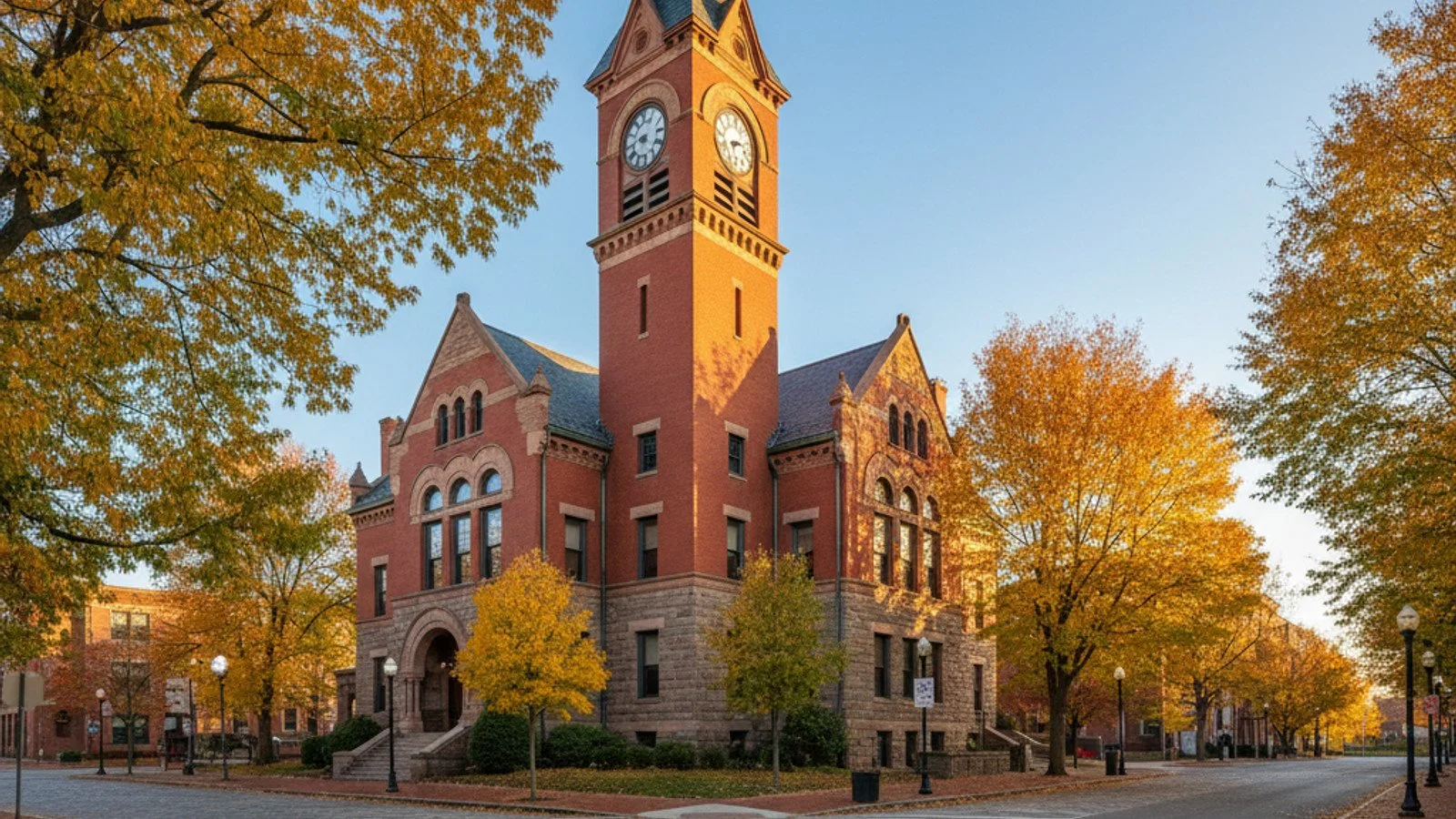
Red Brick Courthouse (1891): This Romanesque Revival building is an icon of downtown. It stopped serving as the main courthouse years ago, but it has been beautifully restored and now serves as the headquarters for Peerless Rockville.
Glenview Mansion: Located within the Rockville Civic Center Park, this 1926 Neo-Classical estate is a stunning piece of property. It’s a social hub often used for weddings and events, bridging the gap between history and modern community life.
St. Mary's Catholic Church: This historic church is the final resting place of arguably Rockville’s most famous connection to the literary world—F. Scott Fitzgerald. He and his wife Zelda are buried here, drawing visitors from all over the world.
Beall-Dawson House: Built in 1815, this brick home survived the Civil War and the urban renewal era. It now houses the Montgomery County Historical Society and offers a tangible look at life in the 19th century.
Frequently Asked Questions About Rockville's History
Why is Rockville called Rockville?
The city was originally known as Montgomery Court House or Williamsburgh. In 1801, the Maryland General Assembly officially changed the name to Rockville. The name was chosen because of the town's proximity to Rock Creek, which meanders through the area.
What famous author is buried in Rockville, MD?
The renowned author of The Great Gatsby, F. Scott Fitzgerald, is buried in Rockville. He was originally buried in a different cemetery, but in 1975, he and his wife Zelda were moved to the family plot at St. Mary's Catholic Church, where you can visit their graves today.
When was Rockville, MD incorporated?
While the area has been a county seat since 1776, Rockville was officially incorporated as a city in 1860. This allowed for more organized local governance just before the onset of the Civil War.
What is the role of Peerless Rockville?
Peerless Rockville is a non-profit organization founded in 1974. They are the primary guardians of the city's history, dedicated to preserving historic buildings, objects, and archives. They played a crucial role in saving the B&O Railroad station and continue to advocate for the city's heritage.