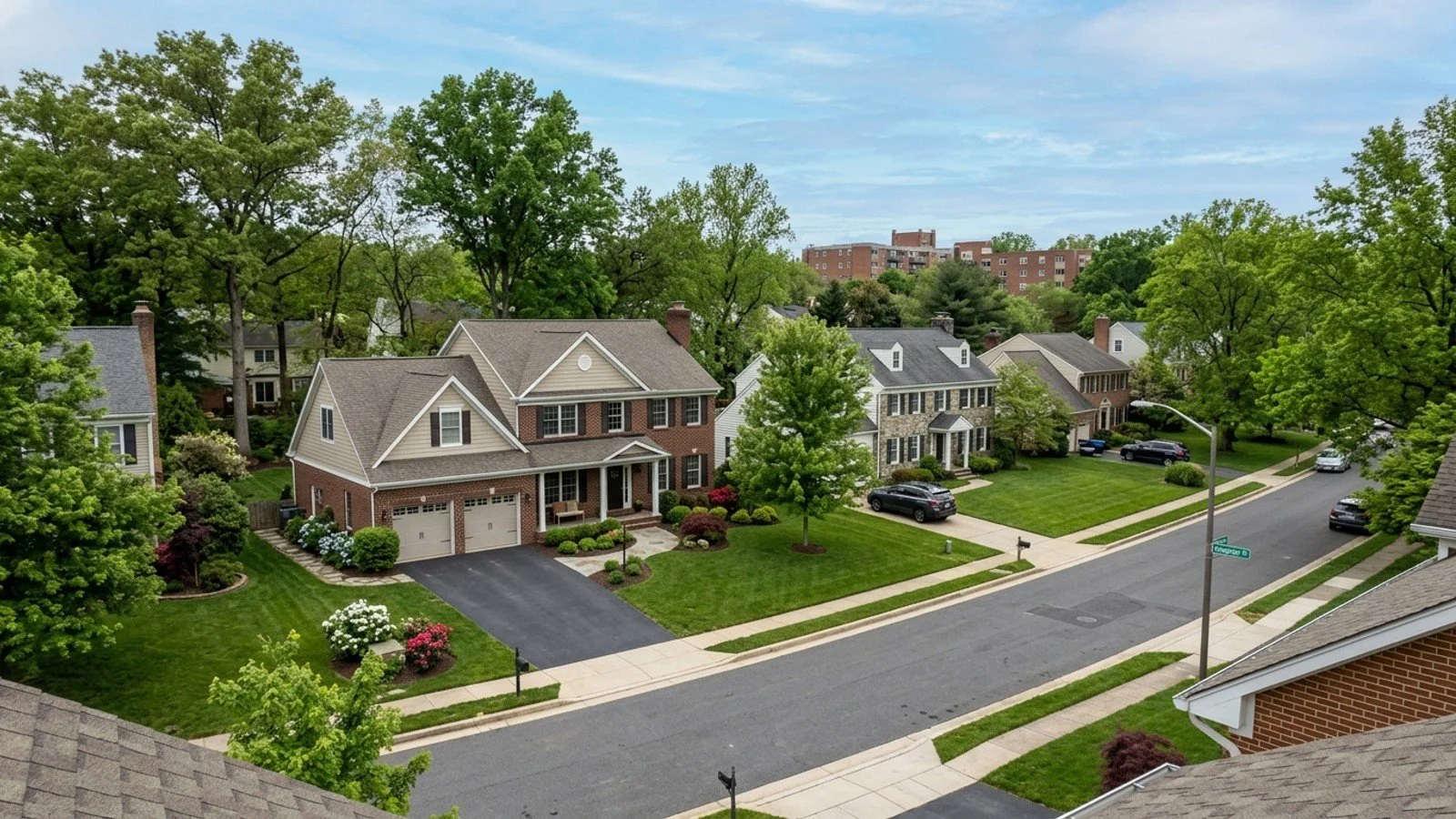
Buyers considering living in Rockville, MD often find themselves comparing the city to its affluent neighbors, Potomac and Bethesda. As of mid-2026, the median home price in Rockville sits around $730,000, while Bethesda and Potomac consistently see medians well over $1 million. These price differences reflect distinct variations in housing stock, lot sizes, and daily convenience.
Your preferred commute, lifestyle, and budget dictate the choice between these areas. Rockville offers a mix of urban centers and established subdivisions, Potomac provides expansive lots with no direct Metro access, and Bethesda delivers a dense, walkable downtown. These factors will help narrow your search.
Cost of Living and Housing Market Differences
In Montgomery County, a $1 million budget secures vastly different property types depending on your zip code. In Rockville, that budget often purchases a large, updated single-family home or a luxury townhome near commercial hubs. The local property tax rate in the incorporated city of Rockville includes an additional municipal tax, which buyers should factor into their monthly carrying costs.
In Potomac and Bethesda, $1 million is often the entry point for a detached home. Buyers in these areas typically need larger down payments and face higher overall mortgage costs. However, buyers in unincorporated Potomac benefit from avoiding the extra municipal taxes levied by incorporated cities.
Real Estate Trends in Rockville
Data from the summer of 2026 shows Rockville's housing market moving at a steady pace. The median sale price is roughly $730,000, and homes spend an average of 51 days on the market before closing. This provides a more accessible entry point for buyers wanting to live in a central Montgomery County location.
Demand remains strong for move-in ready properties in the city. Over half of the homes sold in Rockville recently closed above their list price, indicating a competitive environment for updated listings. The city currently holds about two and a half months of inventory, giving buyers a moderate selection of available homes.
Real Estate Trends in Bethesda and Potomac
Bethesda's median home sale price hovered around $1.3 million earlier this year, representing a higher-priced market segment. Condos in downtown Bethesda offer a lower barrier to entry, but single-family homes routinely surpass the $1.5 million mark. The market here moves quickly for homes within walking distance of the commercial center.
Potomac mirrors Bethesda in price but differs entirely in housing stock. Buyers here find expansive estates and minimal attached housing, meaning the baseline price to enter the Potomac market remains elevated compared to Rockville. The emphasis on acreage and privacy defines the local real estate landscape.
Commuting into Washington D.C.
The distance from Rockville to downtown Washington D.C. is about 15 miles, but the travel time varies drastically based on your starting point and transit method. Rockville and Bethesda residents benefit from direct access to the Metro system, allowing for a predictable daily commute. Potomac lacks its own Metro station, requiring residents to drive to nearby transit hubs or commute entirely by car.
For drivers, the I-270 and I-495 interchange dictates the morning flow. Traffic patterns along these routes require buyers to test their specific drive times during rush hour before committing to a neighborhood. The choice between public transit and highway driving often serves as the deciding factor for relocating buyers.
Taking the Metro Red Line
The Red Line serves as the primary transit artery for Montgomery County. Rockville has its own station, and trains run directly into downtown D.C. without requiring a transfer. This direct line simplifies the commute for professionals working in the District.
Bethesda also sits on the Red Line, offering a shorter ride into the city due to its closer proximity. Potomac residents typically drive to the Grosvenor-Strathmore or Rockville stations to catch the train. This extra driving step adds 10 to 15 minutes to their total morning commute.
Driving via I-270 and I-495
Rockville residents generally use I-270 to connect to the Capital Beltway (I-495). This route experiences heavy volume during peak hours, making the Metro a preferred option for many. Buyers should map their specific route to work to gauge typical delays at the I-270 spur.
Potomac drivers often use River Road or the Clara Barton Parkway for a more direct route into the District. These roads bypass the main I-270 bottleneck, offering a distinct advantage for buyers who prefer driving over public transit. The lack of highway noise in Potomac is a direct result of its distance from the main interstate corridors.
Retail, Dining, and Daily Amenities
Rockville and Bethesda feature concentrated, walkable downtown districts, while Potomac relies on smaller, localized shopping centers. Retail developments in Montgomery County have shifted toward mixed-use spaces that combine apartments, restaurants, and shopping. Rockville has embraced this model extensively along the Rockville Pike corridor.
Bethesda maintains a more established urban core, drawing visitors from across the county for its dining scene. Potomac residents prioritize space over immediate walkability, typically driving to neighboring towns for extensive retail options. The type of commercial access you want will dictate which of these areas feels like home.
Rockville Town Square and Pike & Rose
Rockville Town Square provides a central gathering space with ground-floor dining, a library, and seasonal events. It serves as the traditional downtown for the city, surrounded by mid-rise residential buildings. The area is walkable and connects directly to the Metro station.
A few miles south, Pike & Rose offers a newer, upscale retail experience. This development features a movie theater, high-end restaurants, and boutique fitness studios. It gives Rockville residents immediate access to modern amenities without needing to drive into Bethesda or D.C.
Bethesda Row and Potomac Village
Bethesda Row anchors the downtown Bethesda experience with outdoor cafes, luxury retail, and pedestrian-friendly streets. The concentration of restaurants here is denser than in Rockville, reflecting the area's higher price point. It functions as a destination dining spot for much of the Washington metro area.
Potomac Village serves as the commercial center for Potomac, featuring grocery stores, banks, and local eateries. It provides everyday conveniences but lacks the large-scale entertainment options found in Bethesda or Rockville. Residents trade immediate access to nightlife for a quieter, residential atmosphere.
Frequently Asked Questions
Is it significantly cheaper to buy a house in Rockville, MD compared to Potomac or Bethesda?
Yes, Rockville offers a lower barrier to entry for homebuyers. While Bethesda and Potomac medians easily exceed $1.3 million, Rockville's median sits closer to $730,000. Buyers can often find a detached four-bedroom home in Rockville for the price of a two-bedroom condo in downtown Bethesda.
Which offers a faster commute into Washington D.C.: driving from Potomac or taking the Red Line from Rockville?
Taking the Red Line from Rockville is generally more predictable and often faster during peak rush hour. A Metro ride from the Rockville station to Metro Center takes approximately 35 to 40 minutes. Driving from Potomac via the Clara Barton Parkway can take anywhere from 30 minutes to over an hour depending on morning bottlenecks near the Georgetown exit.
How does the walkability and dining in Rockville Town Square compare to Bethesda Row?
Bethesda Row provides a more expansive, upscale dining scene spread across several city blocks. Rockville Town Square is more compact and centered around a single plaza. Bethesda Row features over 50 restaurants and luxury retailers within a half-mile radius, whereas Rockville's options are concentrated closer to the immediate Metro station footprint.
Will I get more square footage and land for my real estate budget in Rockville, MD or Potomac?
Potomac delivers significantly more land and interior square footage for your money, but Rockville still wins on pure affordability. A $1.2 million budget in Potomac might secure a home on a two-acre lot, whereas that same budget in Rockville could purchase a newer construction home on a quarter-acre. Potomac zoning actively preserves large lot sizes, meaning minimum lot requirements are much higher than in Rockville.
Are property taxes higher in the incorporated city limits of Rockville compared to unincorporated areas like Potomac?
Yes, properties within the incorporated limits of Rockville pay an additional municipal tax on top of the standard Montgomery County rate. For 2026, the City of Rockville's real property tax rate adds $0.292 per $100 of assessed value. Unincorporated areas like Potomac do not levy this extra municipal tax, which can save thousands annually on a million-dollar property.
What are the biggest lifestyle trade-offs when choosing to buy a home in Rockville over Bethesda?
Choosing Rockville means trading the immediate, dense urban walkability of downtown Bethesda for a more suburban environment with distinct commercial pockets. You gain lower housing costs and more parking availability, but you add about 15 minutes to your Metro ride into D.C. Additionally, Rockville's retail leans more toward national brands at places like Pike & Rose, while Bethesda maintains a higher concentration of independent fine dining.