What to Expect When You Build Your Own Home in Rockville, MD
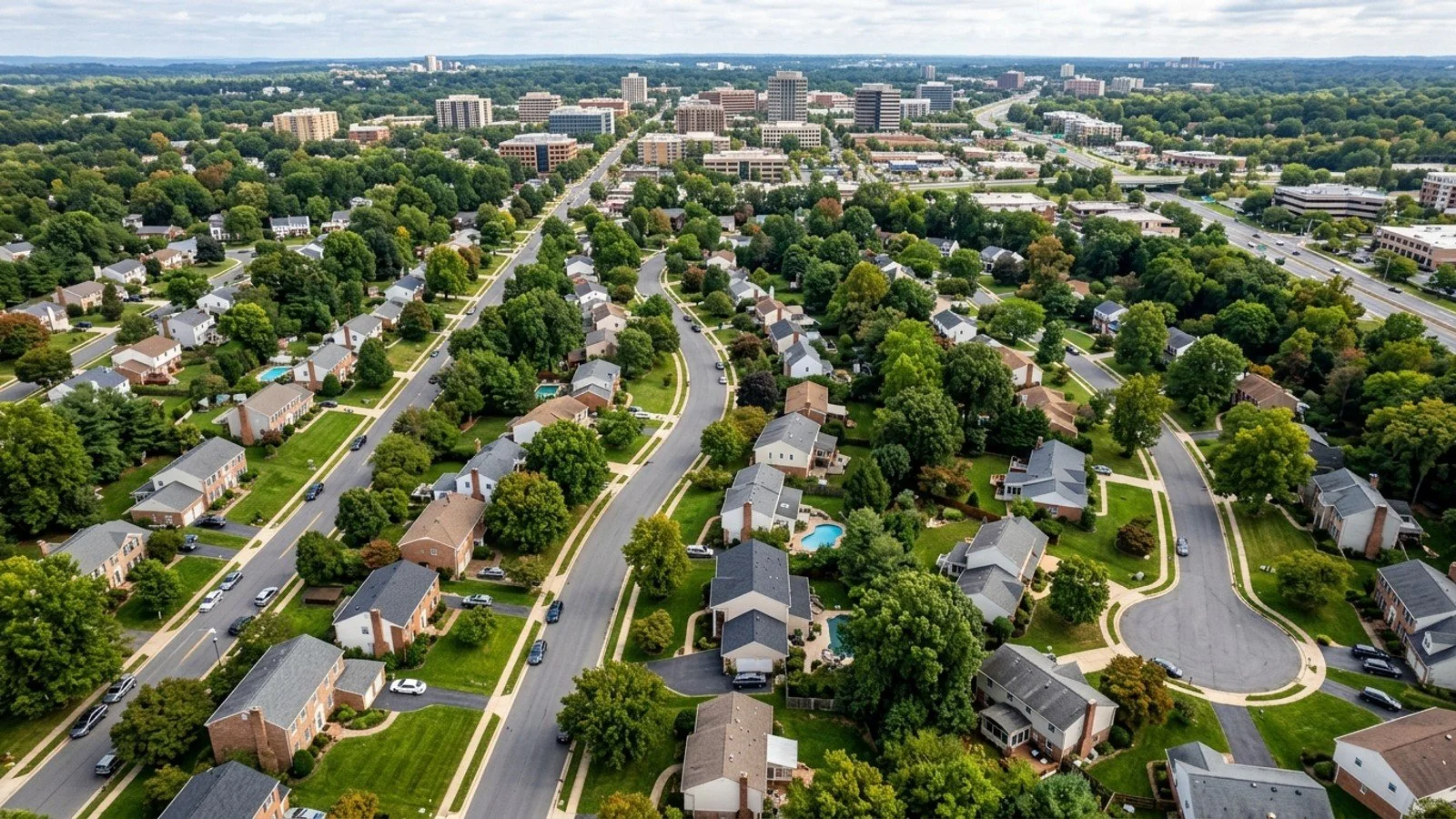
The median sale price for an existing home in the Rockville, MD real estate market currently hovers around $730,000. For buyers frustrated by the low 2.5 months of housing supply, creating a custom property from the ground up offers a way to get exactly what they want.
Taking a project from an empty lot to a finished house requires serious capital and patience. You will need to factor in Montgomery County land values, local labor rates, and building materials before breaking ground.
Average Costs to Build a House in Rockville
Vacant land in Rockville averages roughly $338,800 just for the lot, before any construction begins. Once you factor in the physical build, total costs easily surpass the price of buying an existing home.
Building in Montgomery County carries a premium compared to the rest of Maryland. The proximity to the Washington D.C. metro means higher wages for tradespeople and steeper local fees.
Buyers should expect a total project cost ranging from $600,000 to well over $1 million. This final number depends entirely on the lot you choose and the level of finish you expect inside the house.
State Versus Local Price Differences
Across Maryland, rural counties offer lower land prices and cheaper labor pools. A custom home in the western part of the state costs much less to construct.
Rockville sits in a high-demand corridor where contractors command top dollar. You will pay more for everything from pouring the foundation to installing the roof.
How Location Shifts the Price
A lot right near the Rockville Town Center will cost much more than land further out toward Gaithersburg. Utility access also changes the math.
If you buy an unimproved lot without water or sewer connections, you must pay to bring those utilities to the site. These site preparation costs add tens of thousands of dollars to the bottom line.
Per-Square-Foot Building Rates in the Area
Most custom builders in the D.C. metro quote starting base rates between $200 and $300 per square foot for the physical structure. This figure excludes the cost of the land and site preparation.
Custom finishes push that number higher. High-end appliances, hardwood flooring, and intricate rooflines can easily drive the cost to $400 per square foot or more.
You should ask builders exactly what their per-square-foot estimate includes. Some quote a turn-key price that covers permits and utility hookups, while others only price the materials and labor.
Variations Across Local ZIP Codes
Building in the 20850 ZIP code often involves tearing down an older structure to reuse the lot. Demolition adds an immediate $15,000 to $30,000 to your per-square-foot average.
In the 20852 area, larger estate lots might require longer driveways and extended utility lines. These site-specific challenges increase the final cost of the build.
Estimating Your Total
To get a rough idea of your budget, multiply your desired square footage by $250, then add the cost of your land. A 2,000-square-foot house at that rate equals $500,000 for the structure alone.
Add a $350,000 lot to that equation, and your total project reaches $850,000. You should always hold back an extra 10% to 15% for unexpected cost overruns.
Pricing by Common House Sizes
The size of your footprint dictates the bulk of your materials and labor budget. However, a smaller house does not always mean a cheap build.
Kitchens and bathrooms are the most expensive rooms to construct because they require intensive plumbing, electrical work, and cabinetry. A smaller house still has these high-cost areas, meaning the price per square foot often runs higher than on a massive estate.
Smaller Footprints (1,200 to 1,500 Square Feet)
A modest 1,500-square-foot home typically costs between $300,000 and $450,000 to build, excluding land. This size works well for infill lots closer to downtown Rockville.
Buyers looking at this size often choose a two-story layout to maximize yard space. Building up rather than out requires a smaller foundation, which saves money on concrete.
Mid-Size Properties (2,000 to 2,500 Square Feet)
A 2,500-square-foot build generally runs from $500,000 to $750,000 for construction. This accommodates four bedrooms and multiple bathrooms, fitting well within typical Montgomery County neighborhood standards.
At this tier, buyers often upgrade to premium siding and energy-efficient windows. These choices increase the upfront price but lower utility bills later.
Larger Homes (3,000+ Square Feet)
Pushing past 3,000 square feet usually requires a construction budget starting around $750,000 and easily exceeding $1 million. These homes demand larger lots, which are harder to find and more expensive to buy in Rockville.
Large custom builds often feature complex rooflines, multiple HVAC zones, and three-car garages. Each of these additions requires specialized labor and extra permitting.
What Different Budgets Buy in Montgomery County
Buyers often wonder if a specific dollar amount is enough to get a project off the ground. In Rockville, your purchasing power depends largely on whether you already own the land.
If you have to buy a lot in today's market, a large portion of your cash will disappear before you pour any concrete. Here is what different construction budgets cover assuming you still need to purchase property.
A $200,000 to $300,000 Budget
A total budget of $300,000 is generally not enough to buy land and build a freestanding house in Rockville. Vacant lots alone currently average roughly $338,800.
If you already own a lot free and clear, $300,000 can cover a modest 1,200-square-foot build with builder-grade finishes. You will need to keep the design simple and avoid expensive structural changes.
A $500,000 Budget
With a half-million dollars, you can purchase a cheaper lot further from the city center and build a small home. You might spend $150,000 on the land and $350,000 on the structure.
Alternatively, if you own the land, $500,000 buys a comfortable 2,000-square-foot custom home with upgraded finishes. This budget allows for better cabinetry, hardwood floors, and upgraded landscaping.
Where Your Construction Budget Goes
Building a house involves hundreds of individual expenses. Understanding the major categories helps you decide where to splurge and where to compromise.
Materials and labor will consume the vast majority of your funds. However, local government requirements also take a noticeable bite out of the total.
Land Acquisition and Site Preparation
Buying the lot is just the first step. You must also clear trees, grade the soil, and run utilities to the build site.
If the lot sits on a steep grade, you will pay extra for retaining walls and specialized foundations. Site prep can easily consume $30,000 to $50,000 before framing begins.
Foundation and Framing Materials
Pouring the concrete foundation and framing the wooden skeleton are the most expensive structural phases. Lumber prices fluctuate, which can change your framing costs mid-project if you do not lock in a rate.
The type of foundation you choose matters. A full basement costs much more than a simple concrete slab, though basements are standard for most Rockville homes.
Permits and Local Fees
You must secure approvals from the City of Rockville or the Montgomery County Department of Permitting Services, depending on your exact address. These entities charge for zoning reviews, building permits, and multiple inspections.
Impact fees for local schools and infrastructure also apply to new construction. You should budget at least $10,000 to $20,000 for total permitting and municipal fees.
Comparing New Construction to Buying Existing Homes
Around 81 homes sold in Rockville last month, with a median price of roughly $730,000. For many buyers, purchasing one of these existing properties makes more financial sense than building.
Existing homes typically cost less per square foot because the land, utilities, and structure are already in place. You also avoid the carrying costs of paying rent while waiting a year for a new house to be finished.
However, existing inventory is tight, and roughly 53% of homes are selling above asking price. If you cannot find a layout that works for you, building guarantees you get the exact floor plan you want.
Building Up Versus Out
If you already own a home in Rockville but need more space, adding a second story is often cheaper than buying a new lot and starting over. Building up preserves your existing yard and foundation.
Expanding your home's footprint by building out requires new foundation work and can trigger specific setback rules. You must check local zoning laws to see how close you can build to your property line.
Steps to Getting Your House Off the Ground
The process of building a home requires assembling a team and securing funding long before the heavy machinery arrives. Getting the sequence right prevents costly delays.
You will deal with real estate agents, loan officers, architects, and county inspectors. Coordinating these professionals is a full-time job.
Securing the Right Lot
You need a property that supports your intended house design. A lot might look large enough, but easements and utility lines could restrict where you can actually build.
Always make your land purchase contingent on a feasibility study. This gives you time to verify that the soil can support a foundation and that the county will approve your building plans.
Working With Montgomery County Permitting
Your architect or builder must submit detailed blueprints to the Department of Permitting Services. The county reviews these plans for structural safety, energy efficiency, and zoning compliance.
Once approved, inspectors will visit the site at various stages to check the framing, plumbing, and electrical work. You cannot move into the house until the county issues a final Certificate of Occupancy.
Financing the Build
Standard mortgages do not work for unbuilt homes. You will need a construction loan, which releases funds to your builder in stages as they complete specific milestones.
Many buyers use a construction-to-permanent loan. This product covers the building phase and then automatically converts into a standard 30-year mortgage once the house is finished, saving you from paying closing costs twice.
Exploring Local Builder Communities
If managing a custom build sounds overwhelming, Rockville offers simpler paths to a brand-new home. Production builders handle the land acquisition and permitting for you.
Buying in a new construction community allows you to pick a floor plan and customize the finishes without managing the entire construction site. You get a new house on a much faster timeline.
Move-In Ready New Builds
Builders often construct spec homes in their developments to sell upon completion. These properties are completely finished and ready for immediate move-in.
Purchasing a spec home removes the waiting period, but you lose the ability to choose your own cabinets, flooring, and paint colors.
Working With a Local Builder
Rockville hosts several regional builders who specialize in tearing down old houses and building modern properties in their place. They often have an inventory of lots available for buyers.
Partnering with these companies streamlines the process. They already know the local building codes and have established relationships with Montgomery County inspectors.
Frequently Asked Questions
How much does it cost per square foot to build a custom home in Rockville, MD?
It typically ranges between $200 and $400 per square foot for the structure alone. High-end custom finishes or complex hillside foundations can easily push the total beyond $450 per square foot.
How long does the residential building permit process take with the City of Rockville?
Permit timelines vary based on the project's complexity. For a new single-family home, expect the initial review process to take at least 4 to 8 weeks before you receive approval to break ground.
Is it more cost-effective to buy a teardown and rebuild or purchase an existing renovated home in Rockville?
Purchasing an existing renovated home is almost always cheaper. Tearing down an old property adds $15,000 to $30,000 in demolition costs before you even start paying for the new construction.
What are the local tree canopy and setback rules when clearing a lot to build in Rockville?
The city enforces specific forestry laws to protect the local tree canopy. You must submit a landscaping plan, and removing mature trees often requires paying into a mitigation fund or planting replacements on site.
How do I qualify for a construction-to-permanent loan to build a house in Montgomery County?
Lenders require excellent credit and a larger down payment than standard mortgages. You will typically need to put down at least 20% of the total project cost and provide a signed contract from a licensed builder.
What is the realistic timeline from hiring a builder to moving into a new construction home in Rockville?
The entire process usually takes 12 to 18 months. Designing the home and securing permits takes up the first 4 to 6 months, while the physical construction requires another 8 to 12 months.