What You Should Know About HOA Fees in Rockville, MD
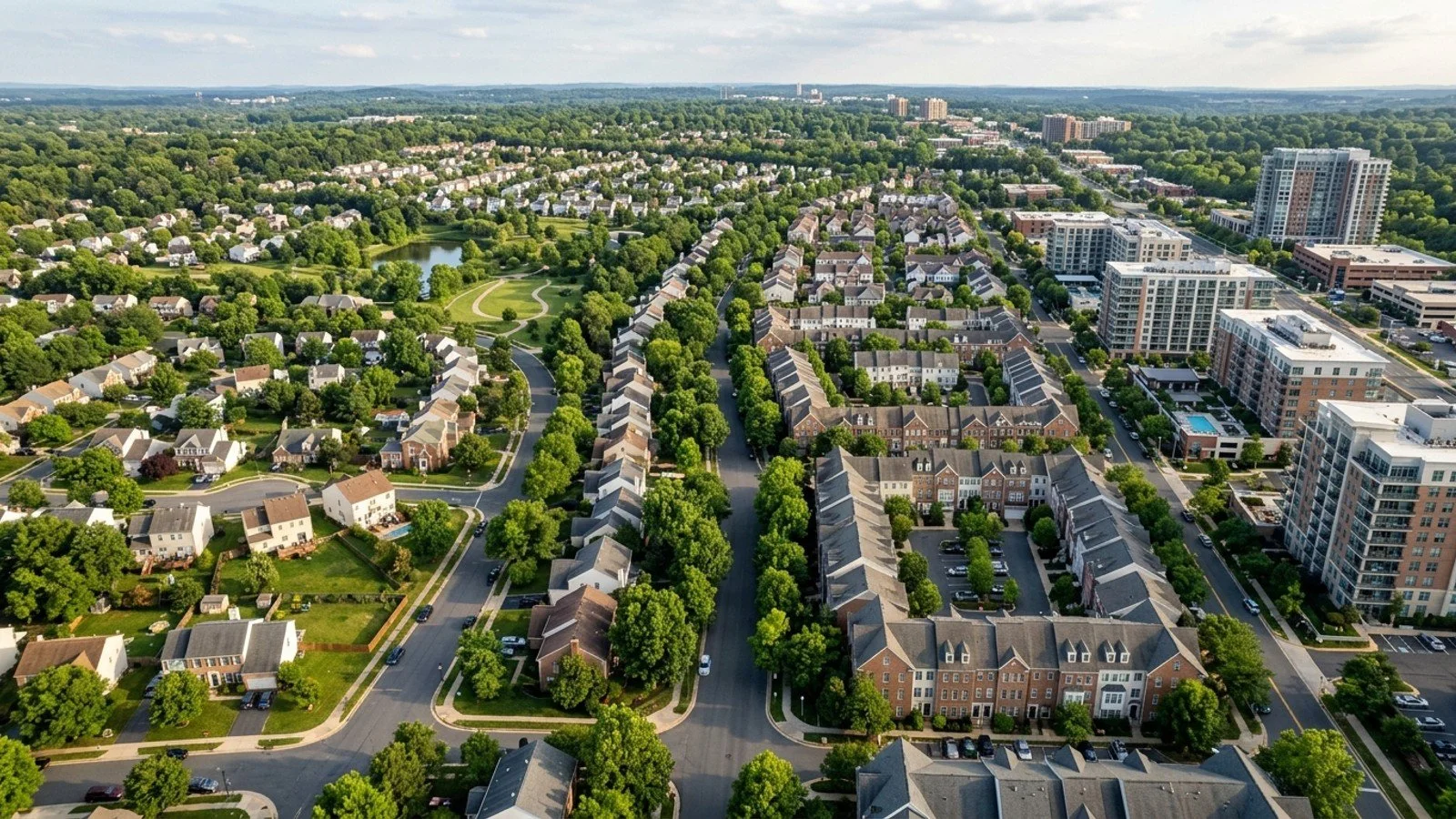
The Rockville, MD real estate market is moving at a steady pace right now - homes are spending roughly 51 days on the market before going under contract, the median sale price sits around $730,000, and buyers are routinely offering slightly above asking to secure a property. It's a competitive environment, and your budget needs to account for more than just the mortgage.
A lot of the available homes here - condos, townhomes, detached houses - belong to a homeowners association. If you're not factoring in HOA dues from the start of your search, you'll end up looking at homes you can't actually afford. These recurring fees affect your debt-to-income ratio, and lenders count every dollar of them.
How Much Homeowners Pay for HOAs in Rockville
There's no clean single number to give you, because costs vary significantly depending on what you're buying. Statewide, typical Maryland HOA fees range from $100 to $400 per month - but that spread tells you more about how different the data sources are than it tells you about any specific community. Some industry aggregators report an average Maryland fee of $210 per month. Others cite a median of $104. On the higher end, some credit unions put Maryland homeowners closer to $401 per month, which would place the state among the more expensive in the country.
In Rockville specifically, the fee you'll pay depends entirely on the neighborhood and the property type. A single-family home listing on Shagbark Court in the 20852 ZIP code recently showed a $195 monthly fee. High-rise condos near the Rockville Metro station will routinely run higher than that. A detached home in a quiet suburban subdivision will often run lower.
What Drives Fees Up or Down
The biggest driver is shared infrastructure. Condominiums charge the highest fees because the association owns and maintains the building's exterior, roof, elevators, and common hallways. That's expensive, and you're splitting the bill with your neighbors.
Single-family neighborhoods are a different story. The association might only be responsible for a front entrance sign, a small playground, or a shared stormwater management pond. Less shared infrastructure means lower dues - sometimes considerably lower.
Billing Frequency: Monthly, Quarterly, or Annual
Condo and townhome communities almost always bill monthly. They're managing ongoing expenses - master insurance policies, trash collection, landscaping contracts - and they need consistent cash flow to do it.
Single-family neighborhoods with fewer amenities might bill quarterly or annually. If a community only charges $300 for the entire year to mow the grass at the entrance, collecting that as one annual payment makes more sense than sending twelve invoices for $25.
What Your Monthly Dues Pay For
Every association packages its services differently, so before you make an offer on any home in Rockville, MD, you'll want to read the actual HOA documents rather than assume.
In most condo and townhome communities, dues cover exterior maintenance, master insurance, snow removal, and common area landscaping. Many associations also include access to amenities - pools, fitness centers, tennis courts. A portion of what you pay each month goes into the reserve fund, which is the association's savings account for long-term repairs: repaving parking lots, replacing roofs, fixing community plumbing systems.
What Associations Do Not Cover
For townhomes and single-family houses, the HOA fee rarely touches your interior or your private lot. Your HVAC system, plumbing, and appliances are your problem. Even in condos where the association covers the building exterior, you still need your own "walls-in" insurance policy - the HOA's master policy won't cover your personal belongings or upgrades inside your unit.
Comparing Rockville Fees to the Rest of Maryland
Urban centers with high-rise buildings tend to carry higher average dues than sprawling suburban counties, and that pattern holds throughout the Washington, D.C. metro area. Active adult and 55+ communities often charge premium fees because they're running extensive amenities - clubhouses, organized events, lifestyle programming. Older single-family subdivisions in Rockville might charge minimal annual fees by comparison.
The honest answer is that statewide averages - which land anywhere from $104 to over $400 per month depending on the source - don't tell you much about what you'll actually pay. Evaluate the fee against the specific property type you're buying. Comparing a high-rise condo's monthly dues to a detached home's annual fee is an apples-to-oranges exercise.
How to Tell if an HOA Fee Is Too High
It comes down to what you're actually getting. A $600 monthly fee might be entirely reasonable if it covers all utilities, a concierge, and a pool. A $150 fee is a problem if the grounds are neglected and there are no amenities to speak of.
The bigger red flag isn't a high fee - it's a depleted reserve fund. An association with low monthly dues and no savings for future repairs is setting up its homeowners for a painful surprise when something major breaks. Ask for the community's budget and the most recent reserve study. That document outlines the expected lifespan of major components and tells you whether the current fee structure can actually cover them when the time comes.
One-Time and Hidden HOA Costs
The recurring monthly or annual dues aren't the only fees you'll see. A few upfront costs show up on the closing disclosure and require cash at settlement.
The most common is the HOA transfer fee, which pays the management company to update their ownership records. There's no verified average specific to Maryland, but national data shows these fees typically run between $100 and $500, with $225 to $250 being common. Some sources note they can occasionally reach a few thousand dollars depending on the specific association.
You might also encounter a capital contribution or initiation fee - a one-time payment deposited directly into the community's reserve fund, often equal to two or three months of regular dues.
Special Assessments
A special assessment is a separate charge the board levies when the reserve fund can't cover a major repair. If a community needs a new roof and didn't save enough to pay for it, every homeowner gets a bill. These can range from a few hundred to several thousand dollars, and they arrive with limited warning.
Before you close, ask to review the association's meeting minutes. If the board has been discussing a big repair project, those conversations will show up there - and you'd rather know about it before you're on the hook for it.
Frequently Asked Questions
What is the average monthly HOA fee for a townhome or condo in Rockville, MD?
It depends on the specific building and its amenities. Statewide, typical Maryland HOA fees range from $100 to $400 per month, and condos with elevators and pools tend to sit at the higher end of that range. Check the individual MLS listing for the exact figure on any property you're considering.
Do HOA fees in Rockville typically cover snow removal and Montgomery County trash collection?
Townhome and condo associations in Rockville generally cover snow removal for common parking areas and sidewalks, and trash collection is often included in those communities. Single-family neighborhoods with minimal dues usually don't - homeowners there typically rely on county services or hire private companies.
How many days do buyers have to review HOA documents under Maryland law before closing on a Rockville home?
Maryland law provides buyers with a set review period after receiving the HOA documents. If you find the budget, rules, or fees unacceptable, you can cancel the contract without penalty during that timeframe.
Are there any single-family neighborhoods in Rockville, MD that do not require an HOA?
Yes. Many older single-family neighborhoods in Rockville don't have a mandatory homeowners association. If avoiding HOA fees is a priority, focus your search on subdivisions built before community associations became standard practice.
As a seller in Rockville, am I responsible for paying the HOA resale package fee, or does the buyer pay?
The seller is typically responsible for ordering and paying for the HOA resale package upfront. That ensures the buyer receives the community's budget, bylaws, and meeting minutes in time for their legal review period.
Can a homeowners association foreclose on my property in Maryland if I fall behind on my HOA dues?
Yes. A homeowners association can place a lien on your property for unpaid dues and eventually initiate foreclosure proceedings. Treat HOA fees the way you'd treat any other secured obligation.